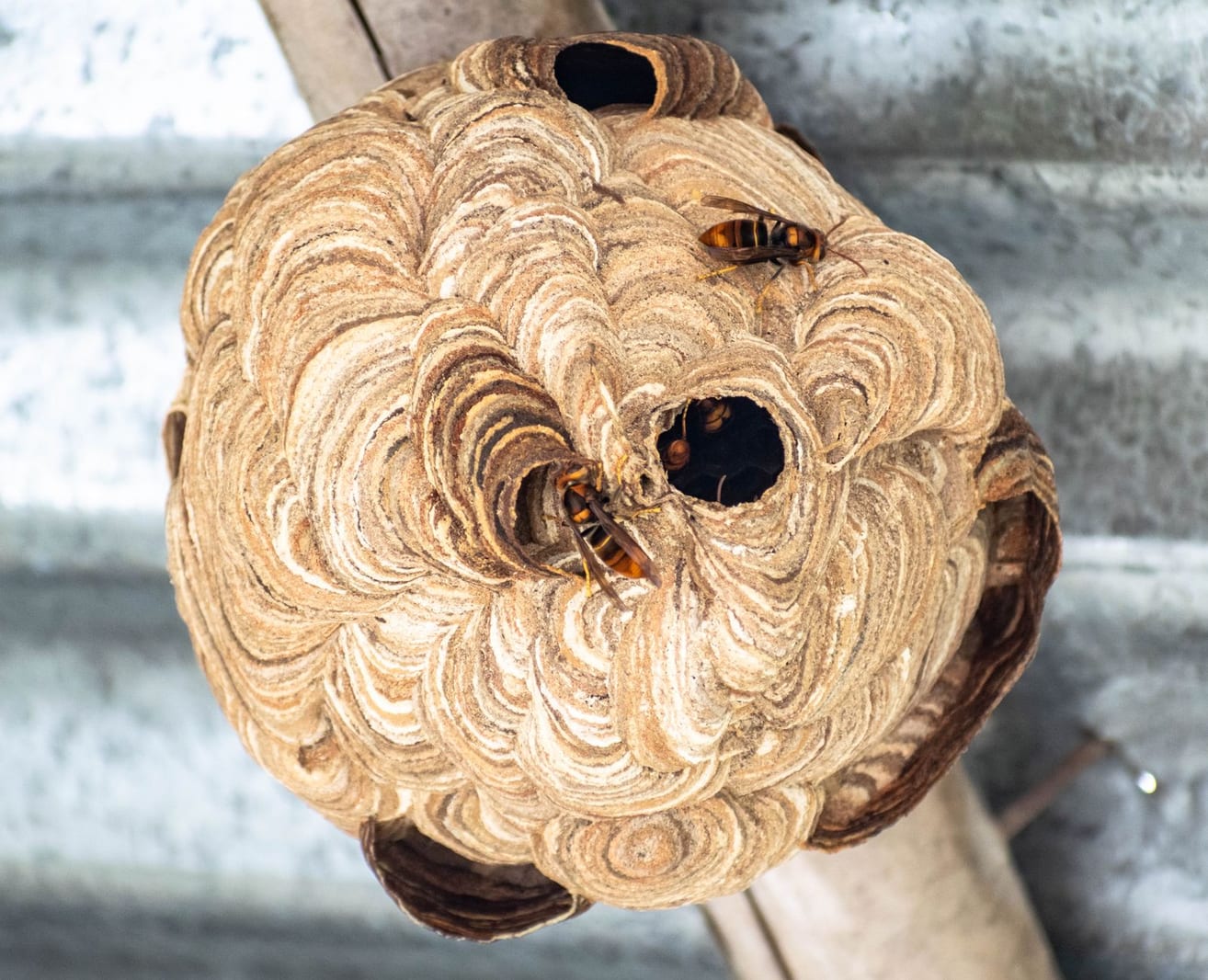
Stinging insect removal is among the most common pest issues we treat in Queens Village. Older homes with basements and crawl spaces are prone to rodents and to carpenter ants where there's moisture.
Stinging insect removal in Queens Village: what to know
Queens Village is largely detached and semi-detached single-family homes with yards and gardens — a very different pest profile from Manhattan's apartments. Expect more ants, stinging insects, wildlife (squirrels, raccoons) and mosquito/tick pressure.
Mature trees and proximity to Alley Pond Park add wildlife and seasonal outdoor-pest pressure, with animals seeking attic and soffit entry as weather cools.
Older homes with basements and crawl spaces are prone to rodents and to carpenter ants where there's moisture.
Signs you need stinging insect removal
- A visible ground nest entrance in a lawn, garden bed, or under a shed
- Steady wasp traffic to one spot along a fence line or in the yard
- A nest under eaves, in a soffit, or near a garage roofline
- Aggressive stinging insects around a patio, deck, or walkway
How we treat stinging insect removal in Queens Village
A detached or semi-detached Queens Village home comes with something most NYC apartments don't: a yard. That means stinging-insect problems here skew toward ground-nesting species — yellow jackets nesting in soil voids near garden beds, under sheds, or along fence lines — as much as the eave and soffit nests common on any building.
Ground nests are especially dangerous to disturb: foragers defend a wide radius around the entrance, and a lawnmower or gardening tool passing too close can trigger a mass response. We treat ground nests at night when the colony is inside, using the right protective equipment, rather than the daytime approaches that make DIY attempts go wrong.
Local landmarks & coverage
We serve all of Queens Village and the surrounding Queens area — including Jamaica Avenue, Cross Island Parkway, Alley Pond Park — across ZIP codes 11427, 11428, 11429.